
Thanks for visiting The Kitchen Invitation today to learn more about the principles of meal planning. This is a comprehensive guide created for you by your new favorite culinary dietitian, me! I’m here to provide you with the most up-to-date information and best practices for meal planning.
As a parent of two littles, I know how important meal planning is and how daunting it can be. If you have a goal to cook more efficiently, add variety, and end the, “what’re we having for dinner tonight?” talk then you’ve found the right post.
Table of Contents
What are Principles of Meal Planning?
Meal planning is the process of deciding what to eat for an upcoming meal. Planning enough in advance can help you spend more time enjoying meal time and less time dreading it. Maintaining the health of yourself and your family is important to everyone and meal planning can make that easier.
Effective planning can save you time, decrease the amount of stress around cooking, and improve your budget. It reduces the daily decisions about what to eat and streamlines grocery shopping and meal preparation, which makes the whole process more efficient. Think about how much less stressed you’d be with this effiency!
What are the Basic Meal Planning Principles?
The basics include using your inventory, separating planning, shopping, and prepping, increasing variety, and mindful nutrition choices. Mastering these meal planning principles will be a game changer for your wallet and home.
Principle One: Aligning Meal Planning with Dietary Guidelines
The Dietary Guidelines exist to give the public evidenced-based recommendations about how to consume and maintain health through their dietary choices. They also aim to improve nutritional awareness and education with the hope of preventing chronic diseases and supporting health.
That’s all fine and well, but how do you take recommendations and make sure you’re adhering to best practices for yourself and your family? I believe it’s all about looking at what you’re currently consuming as a family and evaluating where you could add more nutrients. Focusing on what you can add to your meals is more helpful than focusing on reduction or restriction.
To make it easier, think about the five food groups (grains, fruits, vegetables, protein, and fats) and see if one stands out to you that your family could eat more of. Many of us are not meeting the recommended daily intake of vegetables so if that’s the case for you, use that as a focal point in your planning (see strategies below).
The thing to remember is that your health is determined by a multitude of factors and meal planning is one tool to support it. The below strategies will help you determine which route of meal planning is most helpful for you and your family.
Principle Two: Easy Meal Planning for Family – Weekly vs Monthly
There are multiple approaches to making easy meal planning for families but I find it helps to start by evaluating whether weekly or monthly meal planning is best for you. Let’s dive in!
Weekly Principles Meal Planning
Weekly meal planning means every week on a particular day you lay out a plan for the days ahead. It could include everything from breakfast to dinner and snacks or just dinners. It depends what you are looking for from a meal plan.
As both a parent and dietitian, I find weekly planning to be beneficial because of busy schedules and changing commitments week-to-week. Looking at your calendar to see what you have going on in the upcoming week helps you generate a doable plan. If there are three nights where you’re busy right up until dinner, you may want to plan on a slow cooker meal like this Pumpkin Sweet Potato Soup or make/prep a meal ahead of time.
I find it helpful to break up weekly meal planning into smaller steps such as forming or adding to a “to-cook” list one night, having a planning day, making the grocery list, shopping or ordering groceries and finally, writing the plan down where everyone can see it on a whiteboard, for example.
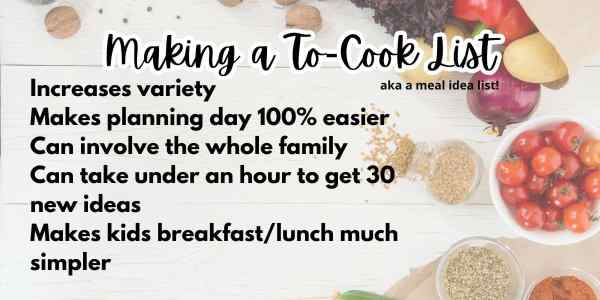
What’s a “to-cook” meal idea list?
I’ve helped hundreds of people improve their meal planning skills by encouraging them to form a to cook list! If you don’t know, a to-cook meal list is just a list of gathered recipes and ideas that you keep in the note section of your phone, computer, or a planner.
This is a helpful list so that when you make a meal plan you’re not starting from scratch searching for ideas. Personally, my list is in the note section of my phone with links, comments, and screen shots. This helps immensely with adding variety to your meal plan.
Another part of a to-cook list is having a list of ideas for your kids meal planning like breakfast and lunch. I have a running list of these ideas too so when it comes to shopping for them (and myself) we’re guaranteed variety, happy bellies, and a less stressed mama.
Monthly Principles of Meal Planning
Long-term meal plans, such as monthly, can be another common way to plan, increase variety, and even incorporate batch cooking into the mix. Typically, it involves selecting a range of recipes for breakfast, lunch and dinner, and then a shopping list for the entire month. The planning might take a bit longer but in a matter of hours, you could have a month’s worth of food laid out for you.
Alternatively, you can plan out your entire month’s worth of food and still shop week-to-week.
A to-cook list as mentioned above can be helpful when making a month-long plan, but many people who meal plan monthly also batch cook. Batch cooking is when you prepare larger quantities of certain components and freeze them for later use. For example, cooking five pounds of ground beef and freezing it in one pound portions to use five times throughout the month.
This can be helpful in creating a monthly plan by spreading out the usage of what you’ve cooked. In the ground meat example, you can cook five pounds of meat and find five recipes utilizing one pound portions at a time. Spread these out across the month to encourage variety and prevent repetitive eating burn out (more below, stay with me!).
If a monthly plan sounds like it would serve you best, I would dedicate an hour to create the plan, make the list and then review the plan or make tweaks week-to-week. It’s important to remain flexible with any plan (weekly or monthly). Overall, any schedule can simplify meal preparation during busy days and make cooking less stressful as a whole.
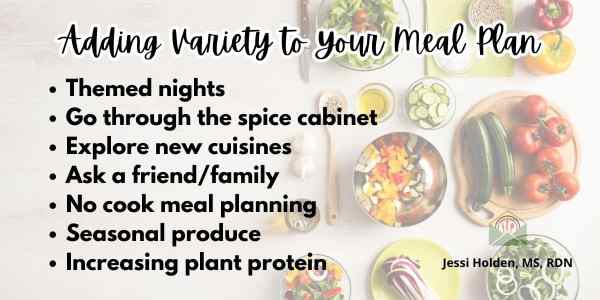
Principle Three: Adding Variety to Your Weekly or Monthly Plan
Rotating the types of meals you cook and the ingredients used is an important aspect of preventing food fatigue. Intentionally diversifying what you eat helps ensure a broader intake of essential nutrients, prevents monotony and might improve enjoyment of food too. Read my post about what to do if you’re not motivated to cook if that’s where you’re at.
Here are a few of the many ways I add variety to my meal rotations and expand my meal idea list:
- Themed nights: Taco Tuesdays are great but make sure to switch up the types of tacos you’re consuming to prevent monotony. Go plant based, try fish, chicken, ground beef, beans, or jackfruit.
- Utilize Spices: Look at your spice cabinet and pick a spice that you rarely use and search for a recipe using that spice.
- Explore new cuisines: Pick a new cuisine you’ve never tried and search for a simple recipe to get started.
- Ask a friend/family member: Text five friends or family members to send you a dinner they recently cooked and really enjoyed. That’s five new ideas right at your fingertips.
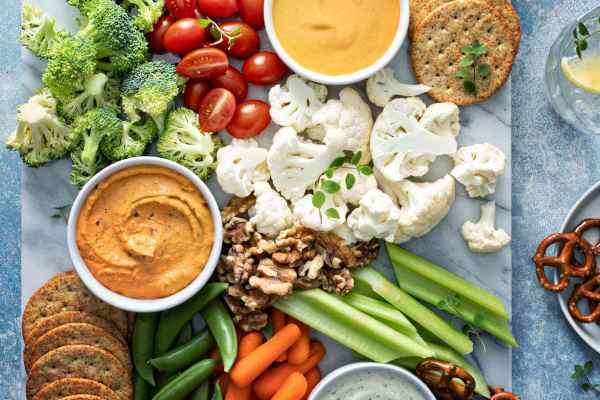
- No-cook meals: Cooking burnout is very real and can improve if you add in low/no-cook meals such as a yogurt parfait night, small charcuterie boards night, or take out.
- Seasonal produce: Focusing on what’s in season is a great way to add variety and eat food when it’s at its peak freshness. I love sending my email list weekly ideas often featuring seasonal foods, sign-up to get on the list!
If you need more weekly ideas, support and inspiration, check out my Kitchen Invitation community over on Facebook.
Principle Four: Tools and Resources
There are lots of tools out there that can help you get started with your meal planning journey. I find that the most helpful tool is to have someone to share your ideas with and get some feedback and support. Here are some resources and tips.
Create a Food Inventory
You can form your meal plan idea list/to-cook list in a variety of ways. I believe the best way is to start by identifying and listing/inventorying the food already in the pantry, freezer, etc. Creating this inventory can help you start to plan meals around food you have which saves you money.
For example, if my inventory list has frozen ground turkey on it. When I plan a meal plan, I start by finding or thinking of a meal utilizing ground turkey. I recommend planning at least one or two meals a week based on at least one ingredient you already have.
If you don’t want to create an inventory list, then your tool/task is more about looking in the freezer or pantry while planning the meals. At least then you will still plan meals incorporating ingredients and food you already have.
Recording Your Meal Plans
Not only do I want you to write your weekly meal plan somewhere the whole family can see it, but I want you to save it somewhere else. Trust me, this is one of the best tools I can encourage you to try so that you can make meal planning a sustainable and enjoyable experience.
Personally, I save my meal plans in the note section of my phone. I’ve been doing this for over one hundred weeks and now I’ve got a ton of done-for-me meal plans if I’m just not sure what to cook. I can also save links to recipes, add notes for how I would tweak a meal for next time or if a meal was a particular hit or miss with my family.
Principle Five: Special Considerations, Allergies, & Restrictions
Accommodating diverse dietary restrictions, allergies and preferences can add a level of challenge to meal planning. It’s not impossible to get there but here are some additional things to consider trying.
Start by making sure you have a solid understanding of specific allergies, sensitivities, and preferences (i.e vegetarianism, etc) individuals have. Assumptions will only yield meal plans where not everyone can eat the same food and you’ll spend twice as much time cooking multiple meals for everyone.
Spend a chunk of time creating your to-cook list and look through the recipes thoroughly. Add the link to your list with notes such as, cook without tomatoes or add chicken after taking out a portion for your youngest. Adding notes can help you remember what to modify when it comes to shopping, prepping, and cooking.
If you don’t already, make sure to know where and how you can make safe substitutions for allergies. For example, nuts can often be replaced with seeds like sunflower or pumpkin seeds, while dairy can be substituted with plant-based milks like almond, soy, or oat.
When searching for recipes online, use keywords to your advantage. For example, “simple one-pot meal customizable for a vegetarian with no onions.” I can almost guarantee that you’ll find recipes that fit your needs if you’re very specific about how you search for them.
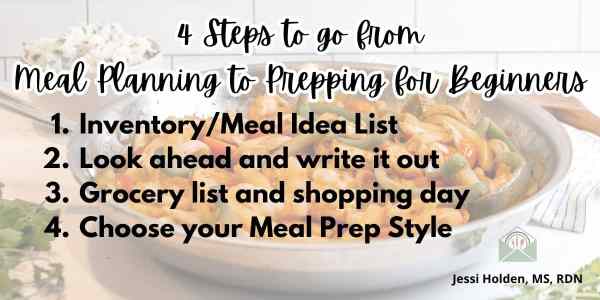
Principle Six: Putting it All Together – Step-by-Step
This may be the most important of the principles of meal planning. Here I’m going take you step-by-step exactly how I create my meal plan every week to give ourselves diverse meals, easy lunches, what to do about leftovers, etc. Grab a piece of paper and take some notes!
Step One: Look at my Inventory and To-Cook List
Every week review my inventory and my ever growing to-cook list. We are humans, not machines, it’s hard to remember every recipe you’ve ever seen and thought would be fun to try. When you find them, add them to this list and use it in your planning hour.
My planning day is typically Thursday mornings after dropping my one kid off for childcare and getting the baby down for a nap. It’s calm, quiet and I can plan without being interrupted. Nighttime is when I’m recipe hunting through my books, online, or through social media and adding those ideas to my overall list.
Step Two: Write the Plan and Look Ahead
While I’m planning, I look at the week ahead of me to identify any outliers as far as particularly long days, extracurricular activities, and when an encore or fend-for-yourself (FFY) night will work best.
For dinners, I plan at least four or five per week knowing that one or two other nights will consist of repurposed leftovers or fend-for-yourself. Our weekends often consist of one take out meal so I plan this in as well. I make sure to plan meals I know I can do some prep for ahead of time and/or that align with that day’s schedule.
For example, if my husband is getting home from work at 5:45 PM and I need to leave for work right at that moment then I plan a meal I can easily cook or have mostly prepared such as a sheet pan, one-pot, or slow cooker meal. More about meal prep below!
For my family, it works that I plan and prep one lunch and one breakfast on Sunday or Monday. It can be anything from a overnight oats, to a Ham and Cheese Frittata or a Crisp Salad with Pear and Apricot. This way, I’ve got an easy go-to plan for those meals and can rely on fall backs such as eggs and toast, cold sandwiches or small charcuterie boards, etc.
Step Three: Grocery List and Shopping
The meal plan is created three days before grocery shopping in order to account for last minute switches/changes from the end of last week’s meal plan. Perhaps Friday we end up not cooking what we planned and order from a restaurant instead. Spacing out when I make my list/shop from when I do my planning has helped prevent food waste from scenarios like this.
Personally, I recommend printing recipes online to make the list-making and cooking that much easier. Gather your recipes, make your entire grocery list, and then shop from your freezer/pantry especially if you’re not planning based on foods you already have. Shopping from your home first can vastly improve your food budget and help you waste less.
If you want to see some sample meal plans, grab my email newsletter here. I send emails weekly and love to inspire you with my own meal plans, ideas, challenges and to-cook lists.
Step Four: Meal Preparation
Meal prep is an entirely different beast than meal planning but don’t let that stop you from exploring it! It’s another useful tool in order to help make cooking easier, prevent burn out, improve efficiency and overall joy in cooking. Meal prep can look different to everyone!
Here’s a variety of meal prep strategies to try:
- Pre-cook an entire meal for one of your very busy nights
- Pre-cook a component from a meal such as the grain or protein
- Load the slow cooker the night before you so all you have to do is put the pot back in the base and turn it on
- Chop the produce, garlic, etc for one or all of your meals ahead of the week
- Pre-make/pack your breakfast or lunch (even if you work from home, trust me)
- Measure all of the spices for a recipe ahead of time (day of, night before, week of, etc)
It’s pretty clear there is a wide variety of ways to prepare meals. No one way is the right way, it just matters that you find what works for you and your family. Try a couple of different strategies out, commit to them for a few weeks then reassess.
Principle Seven: Monitor and Evaluate
Assessing the effectiveness of meal planning techniques can help you determine its impact on your health goals, grocery budget, and time management. Take into account how everyone is feeling physically and mentally based on the foods you’re providing. Remember to never shame yourself for not following your plan all the time.
Flexibility and compassion are two very important tools to utilize when cooking for yourself and your family. Things happen, plans change, just do your best and keep monitoring what’s working and what’s not.
Be sure to notice expenses and time spent on meal preparation to determine if the plan is sustainable and efficient. Look closely at your budget and time you spend in the kitchen now, so that in a few months you can compare data and see how you’re doing. Remember, remain patient and ease into meal planning so you don’t get overwhelmed and stop doing it entirely.
I suggest you also come up with a running list (embedded within your to-cook list) of the EASIEST meals you’ve made to date. Everyone has weeks where time is particularly short or there are a lot of things going on so that’s when you want to use fallback meals. My fallback meals usually include breakfast for dinner, cold sandwiches with fruit/veggies, loaded veggies nachos, or snack/charcuterie style plates.
Fallback meals consist of ingredients that you can almost always rely on having. For example, one of mine is a lentil pumpkin chili because 90% of the ingredients are canned goods and I can choose what fresh veggies to add in the moment.
The End Goal of Meal Planning for Your Family
Overall, the goal of my principles of meal planning is to find how they fit into your life and to see what benefits it yields for you. Read each principle and select one tool that you can apply to your meal planning strategy this week.
Cooking is a never ending process! If you’re still feeling stuck, overwhelmed, and need someone to go through your pantry with you then get in touch, a culinary and family dietitian of 10+ years. I’m always willing to try and assist further in helping you create a sustainable and enjoyable cooking experience.
Do me a favor, if you found this helpful for your family will you share it with another? We all deserve to enjoy cooking and preparing meals for our family with less (or little to no) stress. Principles of meal planning are meant to be served to everyone of every background so we can help each other out. Better yet, share in the comments some other meal planning tips you have!






Pingback: Veggie Egg Bites | The Kitchen Invitation