
Coming up with nutritious vegetarian lunch ideas for kids can be a challenge, especially when you want to keep things exciting and balanced. I’ve got you covered with 40 ideas I provide my family with on the regular!
Vegetarian lunch options offer a great way to incorporate a variety of flavors, textures, and essential nutrients into your child’s diet. Plant-based ingredients provide the vitamins and minerals your child needs while encouraging them to explore new foods.
Whether your family is fully vegetarian or you’re just looking to add more meatless meals into rotation, this guide will help you keep mealtime both fun and wholesome! It never has to be an all or nothing way of eating.

40 Quick and Easy Vegetarian Lunch Ideas for Kids
A vegetarian diet offers endless possibilities for delicious, healthy meals that your kids will love. Below, you’ll find 40 quick and easy vegetarian lunch ideas that are perfect for busy families.
- Hummus and veggie sandwich: whole wheat bread with hummus, cucumbers, bell peppers and spinach)
- Grilled cheese sandwich with tomato soup
- Peanut butter and banana sandwich on whole wheat bread
- Veggie quesadilla: cheese, black beans, bell peppers
- Caprese salad: mozzarella, cherry tomatoes, basil, balsamic drizzle
- Tofu stir-fry with veggies and brown rice
- Veggie sushi rolls: cucumber, avocado, carrot, asparagus
- Mini veggie pizzas on whole wheat English muffins
- Lentil salad with cucumbers and tomatoes
- Cheese and bean burritos
- Veggie pasta salad: pasta, olives, cherry tomatoes, spinach, Italian dressing
- Greek yogurt with granola and mixed berries
- Veggie-loaded scrambled eggs with whole wheat toast
- Pita bread with falafel, cucumbers, and tzatziki
- Spinach and cheese stuffed quesadillas
- Veggie burgers with lettuce, tomatoes, and pickles
- Avocado toast with a side of fresh fruit
- Black bean and corn salad with a lime dressing
- Veggie and cheese roll-ups on whole wheat tortillas
- Quinoa salad with roasted veggies and feta cheese
- Edamame and brown rice bowl
- Bean dip with whole wheat pita bread and veggie sticks
- Veggie lasagna roll-ups
- Sweet potato and black bean tacos
- Veggie frittata with a side of whole grain crackers
- Veggie kebabs with hummus dip
- Vegetarian chili in a thermos
- Macaroni and cheese with peas
- Vegetable dumplings with soy dipping sauce
- Vegetable spring rolls with peanut dipping sauce
- Baked ziti with spinach and ricotta cheese
- Broccoli and cheddar soup in a thermos
- Vegetarian taco salad with black beans and tortilla chips
- Rice cakes with almond butter and banana slices
- Roasted veggie and quinoa bowls
- Whole wheat crackers with cheese and sliced veggies
- Mini spinach and cheese calzones
- Veggie omelet in a wrap
- Roasted vegetable and hummus pita pockets
- Stuffed bell peppers with quinoa and beans
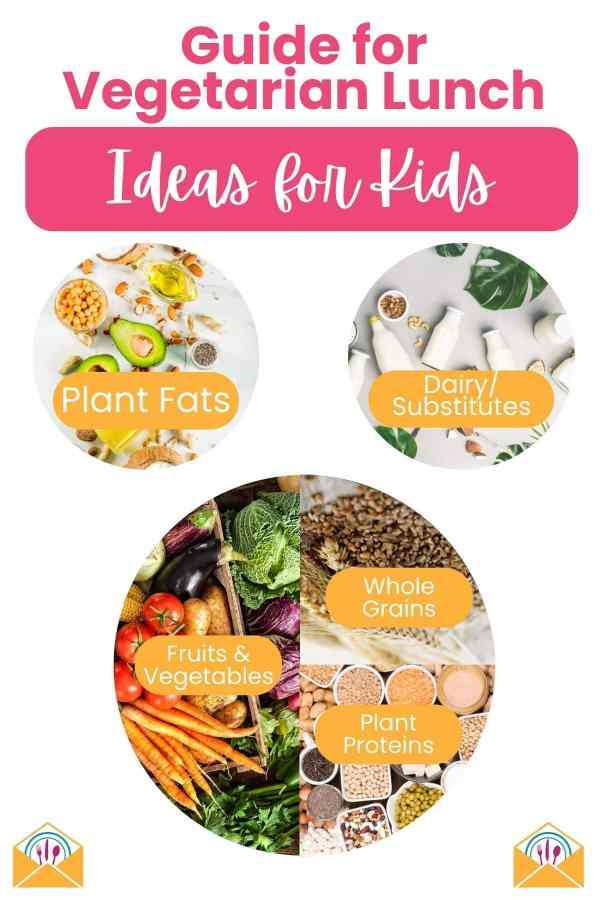
Planning Balanced Vegetarian Lunches
Creating a well-rounded and nutritious vegetarian lunch for kids doesn’t have to be complicated. The key is to ensure that each meal includes a balance of important food groups: fruits, vegetables, grains, proteins, and healthy fats.
To simplify your lunch prep, follow this easy meal-building formula:
- 1 serving of fruit
- Apple slices, grapes, orange wedges
- 1 serving of vegetables
- Carrot sticks, cucumber slices, cherry tomatoes
- 1 serving of grains, preferably whole grains
- Whole wheat bread, brown rice, quinoa
- 1 serving of protein
- Hummus, black beans, tofu, Greek yogurt
- 1 serving of healthy fats
- Avocado, mixed nuts, sunflower seeds
Using this meal-building formula, a simple balanced lunch could be:
- A hummus and veggie wrap: whole wheat tortilla with hummus, cucumbers, bell peppers and spinach
- A side of apple slices
- A handful of sunflower seeds or mixed nuts
Nutritional Needs for Growing Kids
As children grow and develop, it’s important to ensure they receive the necessary nutrients to support their overall health and development. A well-planned vegetarian diet can provide all the essential nutrients they need, but it’s important to focus on a few in particular:
Protein
Protein is vital for growth, development, and repairing tissues. It’s common for parents to worry about their children getting enough protein on a vegetarian diet. However, incorporating a variety of plant-based proteins can easily help them meet their needs.
It can be beneficial to mix and match different protein sources throughout the day to ensure they get all essential amino acids.
Examples of vegetarian sources of protein include all kinds of beans (chickpeas, black beans, kidney beans), lentils, soy-based products (tofu, tempeh, edamame), quinoa, and dairy products like yogurt and cheese.
Calcium & Vitamin D
Calcium and vitamin D are crucial for building strong bones and teeth, and vitamin D aids in calcium absorption! Dairy (milk, cheese, yogurt), fortified plant milks (almond, oat, soy), leafy greens, and soy products (tofu, sesame seeds) are great sources of calcium in vegetarian diets.
Try to help your children get enough sun exposure so that their bodies can produce vitamin D naturally.
Sunlight exposure to the face and hands for 20-30 mins three times a week is considered adequate for most children, but pigmented skin and the use of sunscreen can diminish the effect of sunlight on vitamin D synthesis.
Make sure to include dietary sources from fortified plant milks or orange juices. You can also consider a vitamin D supplement, but be sure to consult with your healthcare or provider before adding any dietary supplements to your child’s diet.
Iron
Iron is essential for healthy blood and cognitive development. Iron deficiency can be a concern for vegetarian kids since iron from plant sources (called non-heme iron) is not absorbed as efficiently as iron from animal sources (heme iron).
To counter this, it’s helpful to combine iron-rich foods with vitamin C (like citrus) to enhance absorption. Foods like leafy greens (spinach, kale), beans, lentils, fortified cereals, nuts, and seeds are great plant-based sources of iron.
Zinc
Zinc is vital for growth and immune function, and luckily there are plenty of plant-based sources. Examples of foods containing zinc are legumes (beans, lentils), nuts, yeast-leavened breads, and fermented soy products (tofu, tempeh).
Some food preparation techniques like fermenting and sprouting seeds and grains improve the bioavailability of zinc, or its ability to be absorbed by the body. Luckily, zinc deficiency is quite rare and additional supplementation is not usually recommended.
Vitamin B12
Vitamin B12 is important for energy metabolism and neurological development. Since this vitamin in particular is only found in animal products, it’s important for vegetarian children to consume fortified foods like plant milks or nutritional yeast.
You can also consider a B12 supplement to ensure adequate intake, but remember to consult your healthcare provider!
Tips for Packing and Presentation
Making vegetarian lunches exciting and appealing to kids starts with how they’re packed and presented. By involving your kids in the process and using simple tricks to keep meals fresh, lunch becomes something that they’ll look forward to eating!
Getting Your Kids Involved in the Process
One of the easiest ways to get kids excited about their lunches is by letting them take part in preparing and choosing their meals. This not only makes them more invested in what they’re eating but also teaches them valuable skills about nutrition and making balanced choices.
- Choosing ingredients. One of my favorite tips is to set up different bins or containers in the fridge and pantry, each filled with a different food group – one for fruits, one for veggies, one for grains, one for proteins, and one for healthy fats. Let your kids choose one item from each bin to “design their own” lunches. This empowers them to make balanced meals while still feeling in control.
- Assembling meals. Give your kids age-appropriate tasks, such as spreading hummus on a wrap, cutting soft fruits with a safe knife, or assembling veggie skewers. When they’ve played a role in making the meal, they’ll be more excited to eat it!
Making Lunches Visually Appealing
Presentation matters, especially for younger kids who might be picky eaters. Simple tricks can make healthy lunches more attractive!
- Use colorful containers. Choose bright, fun-colored lunch boxes and containers. Divided containers or bento boxes can keep different foods separate and appetizing, making lunch feel like an exciting variety of mini meals.
- Fun shapes. Use cookie cutters to cut sandwiches, fruits, and veggies into fun shapes like stars, hearts, or animals. You can also create smiley faces or patterns with fruits and veggies to make the meal more playful.
- Variety and contrast. Mix up the colors and textures in each lunch. For example, try pairing crunchy veggie sticks with creamy dips or soft bread with firm fruits like apple slices. A colorful plate with a mix of reds, oranges, greens, and yellows will catch kids’ attention and make them more likely to eat a balanced meal.
Keeping Lunches Fresh
To ensure that lunches stay fresh until it’s time to eat, consider these packing tips:
- Insulated lunch boxes. Keep meals at the right temperature with insulated lunch boxes or bags, especially for items like yogurt, cheese, or leftover meals. Insulated containers like thermoses also work well for soups, stews, or warm pasta dishes.
- Ice packs. Use ice packs to keep fresh fruits, veggies, and dairy products cool. You can even freeze a juice box or water bottle overnight and pack it alongside the lunch to act as an ice pack, which will tend to thaw and be ready to drink by lunchtime.
Wrapping Up: Keeping Vegetarian Lunches Fun and Nutritious
Providing kids with balanced, delicious vegetarian lunches is not only possible, but it can also be fun and rewarding. By focusing on their nutritional needs and making meal prep a collaborative and creative experience, you can encourage healthy eating habits that will last a lifetime.
Remember, variety is key – mixing up textures, colors, and flavors helps keep things exciting and ensures your kids receive all the essential nutrients they need to grow and thrive!
With these ideas and tips in mind, packing vegetarian lunches can be a stress-free part of your routine. Your kids will enjoy meals that are as appealing as they are nutritious, and you’ll feel confident knowing that you’re supporting their health and development.
Frequently Asked Questions (FAQ)
Q: How can I make sure my child gets enough protein on a vegetarian diet?
A: It’s easier than you might think! Plant-based proteins like beans, lentils, tofu, edamame, quinoa, and dairy products (like yogurt and cheese) provide all the protein your child needs. Offering a variety of these protein sources throughout the week ensures that they’re getting the essential amino acids that are required for growth and development.
Q: What are some tips for encouraging my picky eater to try new vegetarian foods?
A: Getting kids involved in meal prep can be a great way to spark their interest. Let them choose ingredients, assemble meals, or use fun shapes to cut their food. You can also introduce new foods gradually by pairing them with familiar favorites – like adding a few veggie sticks to a sandwich they already enjoy.
Q: How can I keep vegetarian lunches fresh until lunchtime?
A: Insulated lunch boxes and ice packs are key to keeping perishable foods like yogurt, cheese, or fresh fruits and veggies cool until lunchtime. Freezing water bottles or juice boxes can also serve as a cold pack, slowly thawing by lunchtime so kids have a refreshing drink with their meal!
Q: Should I be worried about iron or vitamin B12 deficiency in my child’s vegetarian diet?
A: Iron and vitamin B12 are important nutrients that can sometimes be lower in vegetarian diets. To ensure your child gets enough iron, offer iron-rich foods like leafy greens, beans, and fortified cereals, along with vitamin-C rich foods (like oranges and citrus fruits) to boost absorption. For vitamin B12, include fortified foods like plant milks or consider a supplement if needed. Always consult your healthcare provider or dietitian if you are considering supplements for your children.
Q: Should I speak with my child’s pediatrician or dietitian about their diet?
A: Yes! It’s always beneficial to speak with your child’s pediatrician or dietitian about their dietary patterns, especially when following a vegetarian diet. These professionals can help you make sure that your child’s nutritional needs are being met and provide you with helpful and specific advice.
Make sure to share some of your kids’ favorite vegetarian lunches in the comments below!
Recent Posts
Tips for When Kids Won’t Eat Dinner
Sep
Cooking Tools for Kids (That You’ll Actually Use Together)
Jul
Top 50 Toddler Snack Ideas with Minimal Effort from a Family Culinary Dietitian
May
Adventurous Eaters: Make it Novel, Not Perfect
Apr
Family Nutritionist: 10 Ways to Cook so Little Kids Will Eat
Mar
High Protein Snacks for Vegetarians
Jan
40 Vegetarian Lunch Ideas for Kids in 2025
Jan
Vegan Meal Prep for Families
Dec