
Creating positive eating environments is a crucial part of making family meals more enjoyable. And family meals offer more than just food and nourishment; they provide a space for connection, learning, and development for your children.
Compare the following two scenarios: In the first, your family eats in separate places in front of the TV and is rushed because your oldest child has soccer practice. In the second, your family gathers around the table with no distractions, sharing stories, enjoying their food, and engaging in meaningful conversation.
It’s seemingly obvious that the second environment is more positive, but why? Let’s dive into some reasons why positive eating environments are important and review a few tips on how you can accomplish this in your home.

Why Positive Eating Environments Matter
A positive eating environment goes beyond just sitting together – it fosters emotional connection, encourages mindful eating, and allows family members to truly engage with one another.
Trusting Hunger Cues
Stress-free mealtimes allow children to tune in to their hunger cues and practice mindful eating. Without distractions like TV, tablets, or phones, they can focus on enjoying their food, which can help them develop balanced eating habits and reduce the potential for overeating.
Stability and Stronger Bonds
Family meals provide a sense of stability and comfort, offering a safe space for children to relax, share, and connect. These eating environments can build stronger family bonds and create opportunities for social development, helping children improve their communication skills and understand their emotions.
A study published in the Journal of Pediatrics and Child Health1 found that a higher frequency of family meals led to higher well-being scores and lower depression scores among adolescents. Family meals were also positively associated with better indicators of family relationships, suggesting that family meals present an opportunity for building stronger relationships.
A Chance to Role Model
Kids often mirror their parents’ behavior. When you model a positive relationship with food – trying new dishes, eating many different nutritious options, and maintaining a relaxed atmosphere – your children are more likely to copy these healthful habits. This can help them make adventurous and balanced food choices when they’re on their own and build long-term healthful eating patterns.
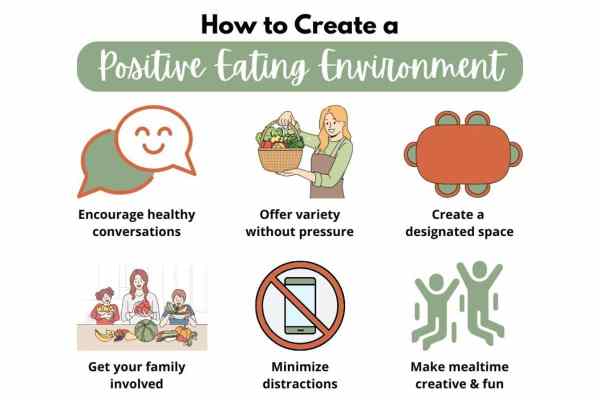
Creating a Positive Eating Environment at Home
Creating a positive eating environment is essential for healthy eating habits and strengthening family connections. Here are eleven tips to help you establish a welcoming and enjoyable meal experience for everyone in your family:
- Minimize distractions. Make sure to turn off screens during mealtime so that your family can focus on their food and making conversation. This can help everyone connect and allow your children to better listen to their hunger cues.
- Respect food preferences without judgment. If a family member doesn’t enjoy certain foods, avoid guilting, shaming or negative comments. Instead, you can acknowledge their preference while encouraging them to try new foods in a non-pressuring way. The goal is to create an accepting environment where your kids feel safe to express their tastes and will experiment with different foods over time.
- When you do offer new foods for your kids, they may be more likely to try it if it’s served along with a favorite meal of theirs. This way, your kids have the opportunity to try something new, but they still have something they can eat if the new item doesn’t work out.
- Offer variety without pressure. Try to provide a variety of nutritious foods and multiple healthy options without forcing your children to eat all of them. Encourage, lead by example, but avoid bribing or pressuring them. It’s also important to respect that your kids may not always finish their entire plate – and that’s okay!
- This doesn’t mean that every meal needs to be brand new and inventive, but introducing new food items opens up the potential for trying new foods. A lot of kids (looking at you, toddlers) are creatures of habit and may be against trying new foods. By trying new foods yourself, you’re encouraging your kids to do the same.
- It also helps to tell kids that it’s okay if they don’t like the new food item. If they try a new food and still don’t like it, let them know that’s alright. Teach them descriptive words about food so you can understand why they don’t like it (today haha).
- Model gratitude for meals. You can also lead by example by encouraging your family to take a moment before eating to express gratitude for the meal. This can look like a simple “thank you,” to the person who prepared it or a brief reflection on the effort that went into making the food. Doing so sets a tone of positivity and appreciation, helping kids value their meal more!
- Create a comfortable and designated space. The goal is to create a calm and enjoyable environment where children feel safe and supported. You can try more relaxed “mood” lighting, background music, or eating in a decluttered space. Also, eating in the same location or at the same table for each family meal is great for consistency!
- Keep a consistent mealtime routine. Try to establish regular meal times each day. A consistent schedule will help your children understand when to expect food and add structure to their day. When mealtime is a predictable part of their routine, it feels more secure and comforting for kids.
- Encourage conversation, not conflict. Avoid bringing up stressful topics during meals – keep discipline or arguments for a different time. Focus on positive discussions around the table, like their favorite part of their day, something they’re looking forward to, or the food they enjoy most in their meal.
- Like I said earlier, kids pick up on the habits and attitudes of the people around them. By saying things like, “If I eat this slice of cake, I’ll have to run on the treadmill later.” Or, “You can’t have a second helping, don’t you want to fit into your clothes?”
- Kids are supposed to be growing, it is dangerous for them to think of getting bigger as a bad thing. To avoid this, it is best to keep comments about food and bodies neutral. This means not labeling some foods as better than others, and talking about who you and your kids are as people, not as bodies.
- Involve your family. You don’t have to do all the work alone! Share meal responsibilities by assigning simple, age-appropriate tasks. This could look like setting the table, helping with meal prep or serving plates, or even sharing decision-making about what to eat to give your kids choice and ownership.
- Make meals fun. Add creativity to family mealtime by adding theme nights, letting kids create their own dishes (Build-Your-Own Tacos or Pizzas), or incorporating storytelling into the conversation.
- The more exposure they have to new food items, the more likely they are to try it. This can be a long process, so follow your kid’s lead, and don’t worry about a timeline.
- Schedule meals for after playtime. Avoid planning popular activities immediately after mealtime. This can prevent your kids from rushing through their meal and allow them to practice more mindful eating. Instead, plan meals for after their activities have ended, and reflect on the fun that they had during conversation.
- I know this one is a case-by-case suggestions. Everyone’s schedule is different, do what works best for your family!
- Avoid Food as Punishment OR Reward. As difficult as it may be, it’s super important to avoid falling into the food bribery traps. By saying things like, “You can’t have dessert until you’ve cleared your plate”, kids are getting the idea that there are good and bad foods. And that they have to eat potentially more than they want in order to eat dessert.
- It’s perfectly normal for kids to have some foods they like and some foods they don’t, we adults are the same way! Kids who grow up with the belief that there are good and bad foods may develop an unhealthy relationship with food. It is best to emphasize balance, openness, and variety with food, rather than calling it good/bad and using it as a reward/punishment.
- It’s perfectly normal for kids to have some foods they like and some foods they don’t, we adults are the same way! Kids who grow up with the belief that there are good and bad foods may develop an unhealthy relationship with food. It is best to emphasize balance, openness, and variety with food, rather than calling it good/bad and using it as a reward/punishment.
Things to Remember As Parents
As parents, you can be great role models for your children when it comes to eating. Choosing nutritious foods alongside your kids sets a positive example and reinforces how important it is (and how fun it can be) to make balanced choices. Kids are very observant and tend to copy you; when they see you enjoying a variety of foods, they’ll want to do the same.
Food is about connection and nourishment, not just a means to an end!
Embracing your child’s autonomy in food choices is another important reminder. Allow them to decide how much they want to eat from what you’re offering, and respect their hunger and fullness cues. As I said earlier, forcing children to finish their plates can lead to unhealthy relationships with food.
I find it personally helpful to serve less than what I think they’ll eat on their plate. Keeping portions small helps reduce the potential for overwhelm, i.e not wanting to eat anything.
I always remind them that they can have more! This helps them develop a sense of autonomy and encourages mindful eating, which is vital for developing positive eating habits.
Takeaways for Your Family
Family meals are more than just a time to eat together – they’re an opportunity to build stronger bonds and create lasting memories. Creating a positive eating environment is at the center of healthful eating habits.
By minimizing distractions, encouraging conversations, and involving your children in the process, you can make mealtime a fun and meaningful experience. Remember, being a role model for healthful eating and avoiding food-related pressure or rewards can help your kids develop a positive relationship with food that will benefit them for life.
Prioritizing these mealtime moments not only supports your child’s physical well-being but also furthers their emotional and social development.
What are some ways that you can create a more positive eating environment in your home? Comment below!
Recent Posts
Tips for When Kids Won’t Eat Dinner
Sep
Cooking Tools for Kids (That You’ll Actually Use Together)
Jul
Top 50 Toddler Snack Ideas with Minimal Effort from a Family Culinary Dietitian
May
Adventurous Eaters: Make it Novel, Not Perfect
Apr
Family Nutritionist: 10 Ways to Cook so Little Kids Will Eat
Mar
High Protein Snacks for Vegetarians
Jan
40 Vegetarian Lunch Ideas for Kids in 2025
Jan
Vegan Meal Prep for Families
Dec