
Developing Kids Cooking Skills isn’t just about making meals—it’s about teaching life skills, building confidence, and fostering a positive relationship with food. From toddlers to teens, every child can benefit from spending time in the kitchen. How do I know this?
I’ve been teaching cooking classes since 2013. As a family-focused culinary registered dietitian (a mouthful, I know) my entire adult career so far has been all about helping make the kitchen an approachable and FUN place for everyone. Kids are no different and deserve time, patience, and fun in the heart of the home.
In this guide, I’ll outline age-appropriate cooking skills, practical tips for teaching kids in a positive way, and simple recipes to get started. Plus, discover how my virtual and in-person cooking classes can provide even more support to families!
Table of Contents
- Why Teach Kids to Cook?
- Kids Cooking Skills by Age
- Tips for Teaching Kids to Cook
- 5 Easy Recipes to Get Kids Started
- Join My Virtual and In-Person Cooking Classes
Why Teach Kids to Cook?
Cooking is a skill that impacts so many areas of life. When kids learn to cook, they can gain:
A positive relationship with food: Involving kids in the kitchen creates a relaxed and enjoyable environment around food. When children take part in preparing meals, they see food as something fun and engaging rather than something they are pressured to eat or like. Trust me, you want this hands-on experience to help you shift the focus from “you must eat this” to “let’s explore this together,” promoting curiosity and removing negative associations with trying new foods. Over time, this approach encourages a neutral and positive attitude toward food that lasts a lifetime.
Confidence: Every time a child masters a new skill—whether it’s cracking an egg or following a recipe—they feel a sense of accomplishment. Cooking offers a unique way for kids to see immediate results from their efforts, boosting their confidence as they succeed in tangible tasks. Overcoming small challenges in the kitchen teaches them resilience and builds self-esteem, qualities they can carry with them into other areas of life.

Life skills: Learning to cook is more than just a fun activity—it’s an essential life skill. As kids grow, knowing how to prepare meals helps them become independent and capable adults. Whether they’re making a simple snack or a full dinner, cooking gives children the tools to take care of themselves and others in the future. By building these skills early, you’re setting your child up for a lifetime of self-sufficiency and healthy habits.
Math and science knowledge: Cooking is a delicious way to teach practical math and science concepts. Measuring ingredients, setting timers, and observing changes like boiling water or baking bread help kids see science in action. They learn about fractions, volume, temperature, and even chemical reactions—all in a hands-on, memorable way. Cooking turns abstract ideas into tangible experiences, making it easier for kids to understand and retain these valuable lessons.
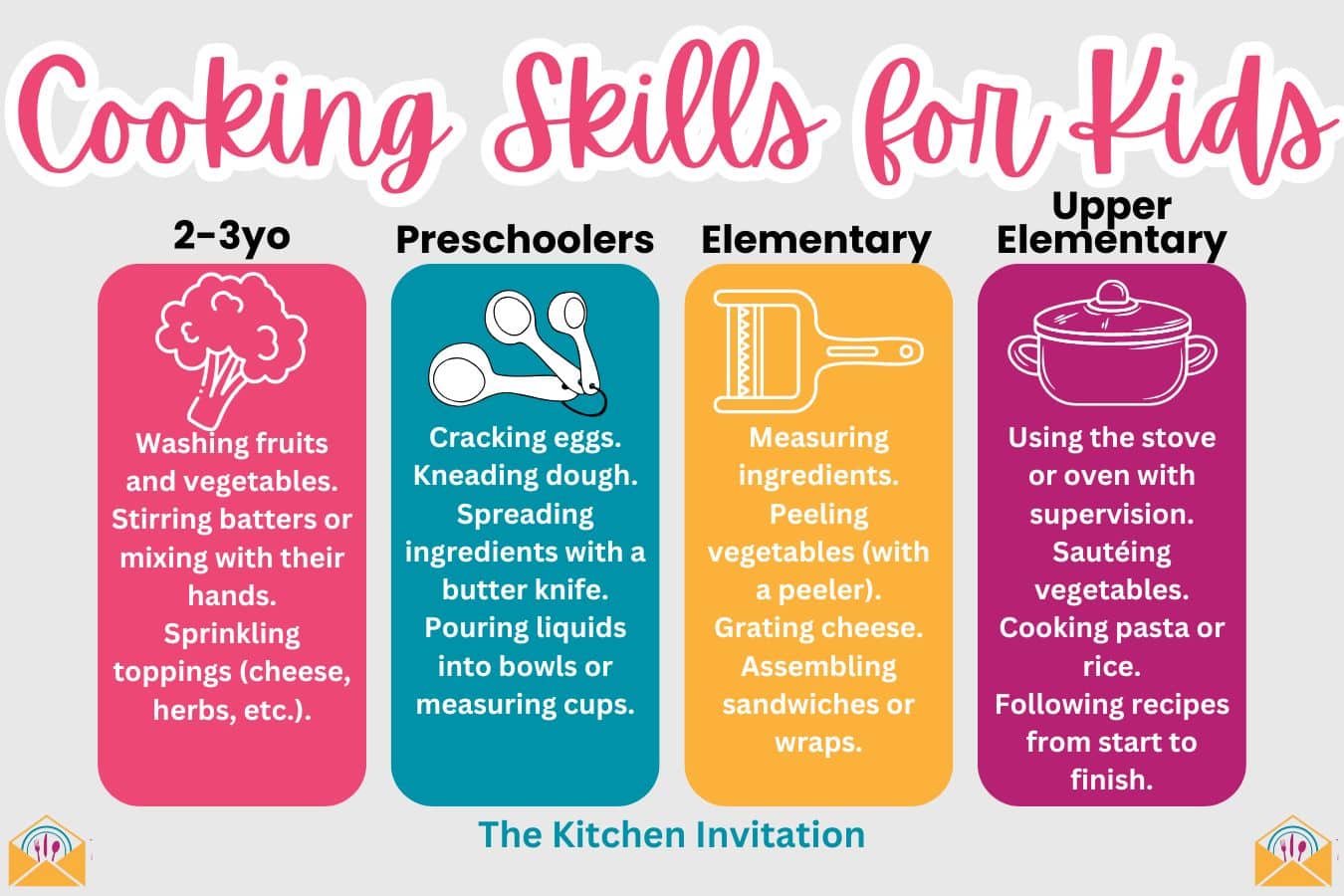
Cooking Skills by Age
Kids can start learning about food from the moment they’re interested. Here’s a breakdown of skills by age to make teaching your kids manageable and enjoyable.
Toddlers (Ages 2-3)
At this age, curiosity is key! Toddlers love to touch, explore, and mimic what they see. Focus on sensory play and simple tasks that build fine motor skills.
Skills to Practice:
- Washing fruits and vegetables.
- Stirring batters or mixing with their hands.
- Sprinkling toppings (cheese, herbs, etc.).
- Using kid-safe knives to cut soft foods like bananas or strawberries.
Pro Tip: Keep tasks short and fun. Toddlers’ attention spans are short, so don’t worry about completing the whole recipe.
Preschoolers (Ages 4-5)
Preschoolers are ready for slightly more structured tasks. They love feeling capable and will often take pride in “helping.”
Skills to Practice:
- Cracking eggs.
- Kneading dough.
- Spreading ingredients with a butter knife.
- Pouring liquids into bowls or measuring cups.
- Cutting soft fruits and veggies with supervision.
Pro Tip: Create a safe workspace at their height. A sturdy step stool can help them safely reach counters.
Early Elementary (Ages 6-8)
This age group is ready to follow simple instructions and handle more detailed tasks. They love taking ownership of their creations!
Skills to Practice:
- Measuring ingredients.
- Peeling vegetables (with a peeler).
- Grating cheese.
- Assembling sandwiches or wraps.
- Cooking simple items like scrambled eggs with supervision.
Pro Tip: Let them experiment! If they want to add “a little extra” cheese or try a unique flavor combination, go with it—it’s all part of the learning process.
Upper Elementary (Ages 9-11)
Older kids are more independent and ready to tackle multi-step recipes. This is the perfect age to introduce them to the “why” behind cooking techniques.
Skills to Practice:
- Using the stove or oven with supervision.
- Sautéing vegetables.
- Cooking pasta or rice.
- Following recipes from start to finish.
- Using sharp knives safely.
Pro Tip: Give them responsibilities like planning a meal or creating a shopping list—it builds confidence and teaches planning skills.
Teens (Ages 12+)
Teens are ready to cook with minimal supervision and can even take on more challenging recipes. Cooking is a great way for them to explore their interests and develop independence.
Skills to Practice:
- Cooking full meals.
- Baking advanced recipes.
- Experimenting with spices and flavors.
- Meal prepping for the week.
Pro Tip: Encourage creativity by introducing them to different cuisines or advanced techniques like making homemade pasta or sauces.

Tips for Teaching Kids to Cook
- Start Small: Focus on one skill at a time.
- Use Positive Language: Keep the focus on the process, not the results.
- Encourage Independence: Allow kids to make mistakes and learn from them.
- Create a Safe Space: Teach safety rules early and often.
- Make It Fun: Incorporate games or themes into cooking sessions.
Tips for Making Cooking Positive and Pressure-Free
- Focus on the process, not the outcome: Celebrate their efforts, even if the results are messy.
- Talk about food in a neutral way: Avoid labeling foods as “good” or “bad.” Instead, describe textures, flavors, and how they make us feel.
- Be patient: Mistakes are part of learning. Same with messes and spills!
- Model safe behaviors: Teach safety skills like handling knives and using the stove, but keep a calm and supportive tone.
- Emphasize teamwork: Cooking together teaches collaboration and builds stronger relationships.
5 Easy Recipes to Get Kids Started
Here are some family-friendly recipes that allow kids to take the lead:
- Build-Your-Own Pizza: Let them spread sauce, sprinkle toppings, and design their own creations.
- DIY Trail Mix: Provide a mix of nuts, seeds, dried fruits, and chocolate chips for them to combine.
- Fruit and Yogurt Parfaits: Layer yogurt, granola, and fresh fruit for a colorful treat.
- Pasta Salad: Let them mix cooked pasta, veggies, cheese, and a simple dressing.
- Smoothies: Kids can pick ingredients, blend, and taste-test their creations.
…but truth be told, kids can cook ANY recipe. My reminder for which recipe you involve them in is to make sure you’re ready for them to be involved. Read over your own recipe and then decide ahead of time how to involve your kids.
Join My Virtual and In-Person Cooking Classes
Cooking with your kids is one of the best ways to connect as a family. If you’re looking for extra support or inspiration, my virtual and in-person classes are here to help!
💡 What You’ll Get:
- Hands-on guidance for kids and parents.
- Age-appropriate recipes and techniques.
- Strategies to make food fun and stress-free
Teaching kids to cook isn’t just about food—it’s about building confidence, fostering creativity, and creating lasting memories. Whether you’re teaching a toddler to mix batter or guiding a teen through a full recipe, every step in the kitchen is a step toward growth.
Ready to get started? Try one of the recipes above, or join my cooking classes to bring even more fun and learning to your family’s kitchen.
What’s your child’s favorite thing to make in the kitchen? Share in the comments below!
Recent Posts
Tips for When Kids Won’t Eat Dinner
Sep
Cooking Tools for Kids (That You’ll Actually Use Together)
Jul
Top 50 Toddler Snack Ideas with Minimal Effort from a Family Culinary Dietitian
May
Adventurous Eaters: Make it Novel, Not Perfect
Apr
Family Nutritionist: 10 Ways to Cook so Little Kids Will Eat
Mar
High Protein Snacks for Vegetarians
Jan
40 Vegetarian Lunch Ideas for Kids in 2025
Jan
Vegan Meal Prep for Families
Dec