
It’s no secret that serving dessert with dinner feels a little backwards. I grew up not being allowed to eat dessert unless I had finished my plate!
But when kids feel restricted around sweets, they may overindulge, place desserts on a pedestal, disconnect from their hunger and fullness cues, or even become fussy and cranky at mealtime. Hello, mealtime battles!
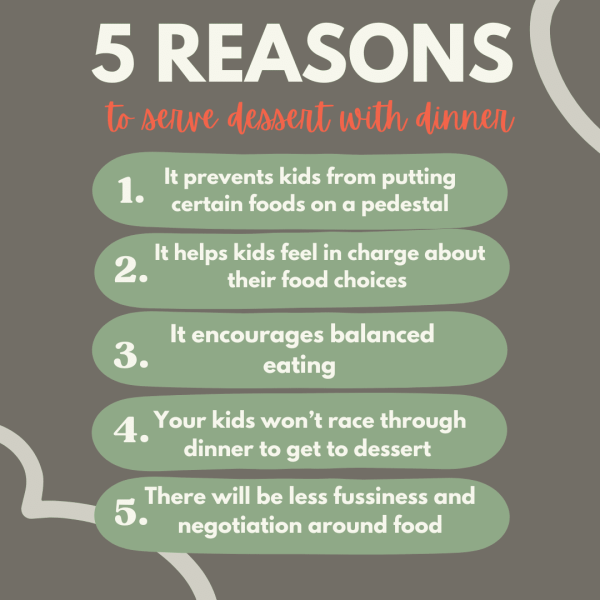
Here are 5 reasons why serving dessert with dinner can help improve kids’ relationships with food and foster healthier eating patterns:
1. It prevents kids from putting certain foods on a pedestal
When you place dessert on your child’s plate alongside the rest of their dinner, they’re less likely to view it as the ultimate prize. Instead, all foods on the plate—dessert, fruits, veggies—are valued equally. This approach helps them appreciate and enjoy everything on their plate, even the healthier options.
Teaching kids that dessert isn’t a reward for finishing their meal helps them avoid seeing vegetables as something to “get through” for the sweet prize. All foods hold value, and they can enjoy everything freely.
2. It helps kids feel in charge of their food choices
By offering a variety of foods on their plate, including dessert, kids learn how to self-regulate and eat in a way that feels good for them. They have the freedom to decide whether they want to eat their dessert before, during, or after their other foods.
This approach also shows them that you trust them to make their own food choices, which fosters autonomy and a positive relationship with eating. A low-pressure environment helps them better listen to their hunger and fullness cues.
3. It encourages balanced eating through an “all foods fit” approach
When too many rules and restrictions are placed around desserts, stigmas can form, potentially leading to an unhealthy relationship with food. While it’s okay to have household boundaries, being overly restrictive with desserts can backfire.
Including a dessert option with dinner removes the idea of “forbidden” foods. This could help prevent kids from overindulging in sweets when given the opportunity, knowing that desserts are a regular, balanced part of their diet. The “all foods fit” philosophy supports a healthy relationship with food in the long term.
4. It prevents kids from racing through dinner to get to dessert
We’ve all seen it—kids speed through their meal just to get to dessert, or they only eat their veggies to earn their sweet reward. Or worse, they cry and gag on their food just hoping to earn their dessert. Using dessert as a bribe can turn dinner into a negative experience.
When dessert is served alongside the meal, kids aren’t distracted by thoughts of whether they’ll get a treat. They’re more likely to focus on the entire meal and their natural hunger signals. The amount they eat of the dessert may even surprise you sometimes!
Sometimes my son (4 years old currently) eats the dessert/sweet first, sometimes not. He tends to finish it but occasionally he has left it behind as well. No matter what they do with it, say nothing!
When you’re overly talking up or down a food, it can cause confusion and stress. If you’re choosing to serve a food, let them explore it and enjoy it at their pace.
5. It reduces fussiness around food
Instead of negotiating over dessert, offering it with dinner creates a calmer, stress-free environment. Your child won’t worry about when they’ll get dessert because it’s already part of the meal.
This strategy helps reduce power struggles and gives kids a sense of control, making them more present at the dinner table and fostering a healthier mindset around food.
Wondering how to start?
It doesn’t mean you have to serve an ice cream sundae with every meal! Here are some simple dessert ideas to include with dinner:
A few M&Ms or pieces of candy: A small handful of your child’s favorite candies can satisfy their sweet tooth without overwhelming the meal. Unwrapping a small treat, like a piece of chocolate or candy, can also promote food neutrality by normalizing these foods as part of the meal rather than something “special” to earn.
A cookie on their plate: One cookie, placed right alongside the other dinner items, helps your child view it as just another part of the meal. Whether it’s homemade or store-bought, it’s a fun way to balance sweetness with the rest of their dinner.
Fresh fruit with whipped cream: Pairing fresh fruit like strawberries or apple slices with a small dollop of whipped cream adds a bit of sweetness while keeping things light and nutritious.
A glass of chocolate milk: This is a simple and familiar treat for kids that can be enjoyed with dinner. You could also try hot chocolate in colder months!
A fun smoothie with their meal: A chocolate-banana smoothie, Bahama Mama smoothie, or whatever your kids enjoy can be a fun way to include sweetness with plenty of nutrients. You can even add a little whipped cream or sprinkles on top for an extra treat.
Family-style treats: Place a small plate of muffins, cookies, or other baked goods on the dinner table and let your child serve themselves. This makes dessert feel like a natural part of the meal and helps avoid the sense of “waiting for dessert.”
Yogurt parfait with a sprinkles and granola: A small parfait made with yogurt, fruit, and a bit of granola can be a sweet and satisfying end to the meal.
FAQs:
Q: Is it normal to serve dessert every day?
A: Every family is different! If you want to offer dessert daily, that’s fine. If not, that’s okay too. You can always experiment to find what works best for your family.
Q: What if I don’t want them to have seconds?
A: You can say something like, “We’re saving some for tomorrow!” or “Once it’s gone, there’s no more left.” Or try, “I’m so glad we had this cake on the menu today, shall we pick another dessert to enjoy next Friday?”
- Of note, if you choose that last sentence it’s really important to follow through. This earns trust with your child that the dessert will come back and they’re not going to be restricted of it.
Q: What if I don’t want to serve dessert with dinner?
A: You don’t have to! While serving dessert with dinner is a helpful tool, it’s not the only way to promote intuitive eating. The key is avoiding using food as a reward and encouraging kids to listen to their bodies.
- Read my post about Intuitive Eating and Meal Planning for Families for other ways to promote it within your household.
Q: What language should we use around dessert?
A: Keep the language neutral and teach descriptive words. Avoid labeling foods as “bad” or “unhealthy.” Instead of saying, “You can’t have cookies, it’s bad for you and you ate some yesterday!” Say, “chocolate chip cookies are SO chewy and sweet, but they’re not on the menu with tonight’s dinner. Should we add them to tomorrow’s menu?”
Q: What about when other families handle it differently?
A: That’s okay! Everyone does things their own way and you can tell your child that. Everyone has different rules and it’s okay to respect their rules. The main rule I won’t let others inforce in my children are earning their dessert by finishing their plate or being required to eat their food in a particular order.
Q: What if they don’t want the “special” dessert like at a party?
A: That’s fine – say nothing! It’s their choice if they eat it or not. Guilting them by saying, “so-and-so made this special for you, you need to eat it” doesn’t help maintain autonomy around food choices.
Final Notes:
Feeding your little ones and promoting a balanced intake of nutrition can be challenging. But allowing your child to have dessert with dinner can support intuitive eating and reduce mealtime fussiness.
For more tips, check out our other blog posts, and feel free to leave questions or comments below!

Recent Posts
Tips for When Kids Won’t Eat Dinner
Sep
Cooking Tools for Kids (That You’ll Actually Use Together)
Jul
Top 50 Toddler Snack Ideas with Minimal Effort from a Family Culinary Dietitian
May
Adventurous Eaters: Make it Novel, Not Perfect
Apr
Family Nutritionist: 10 Ways to Cook so Little Kids Will Eat
Mar
High Protein Snacks for Vegetarians
Jan
40 Vegetarian Lunch Ideas for Kids in 2025
Jan
Vegan Meal Prep for Families
Dec