
Learning how to vegan meal prep for your family can be a game changer to save time and maintain a healthy, balanced diet. For families following a vegan lifestyle, it can be especially important to plan ahead so that your meals are not only delicious, but also nutritionally complete.
Whether you’re new to veganism or looking for ways to reduce the stress of planning your family’s weekly meals, this guide will help you with getting started!

In this post, we’ll explore the benefits of meal prepping, how vegan diets are safe for all ages, and practical tips for building vegan plates. Plus, we’ll share quick and easy meal ideas to help you prep like a pro and create positive meal experiences for your family.
Benefits of Meal Prepping
Meal prepping offers many advantages for families, like making it easier to stay organized, save time, and ensure that everyone enjoys healthy meals throughout the week. Some of the key benefits of meal prepping include:
- Saves you time (and gets you organized). Prepping meals in advance reduces the time spent cooking on busy days, so you can put your attention elsewhere!
- Reduces stress. You can make fewer last-minute decisions about what to cook and eat.
- Encourages healthier eating habits. Preparing ahead of time helps you stick to nutritious meals instead of opting for quicker options (which tend to be takeout or processed).
- Cuts grocery costs. Planning in advance helps you buy only what you need and reduces food waste. Try to stick to your list!
Are Vegan Diets Safe for All Ages?
Vegan diets, when appropriately planned, are indeed safe and healthful for all stages of life, including infancy, childhood, and adolescence, according to the Academy of Nutrition and Dietetics.1
In fact, plant-based diets are not only more environmentally sustainable, but can also reduce your risk of many chronic health conditions including heart disease, type 2 diabetes, high blood pressure, certain types of cancer, and obesity. It’s also been shown that these diets can reduce LDL (bad) cholesterol levels and improve insulin sensitivity.1
There are a few nutrients to make sure to include as a regular part of a vegan diet, including things like protein, calcium, vitamin D, and iron. Also, since vitamin B12 is only found in animal products, it’s recommended that you include reliable sources like fortified foods or supplements.
Let’s dive into some food sources of these nutrients and practical ways to incorporate them into your meals!
How to Build Balanced Vegan Plates
Creating a well-balanced vegan plate is important to ensure your family gets the nutrients they need from plant-based foods. A simple and effective way to plan your meals is to divide the plate into different portions. Here’s a visual guide:
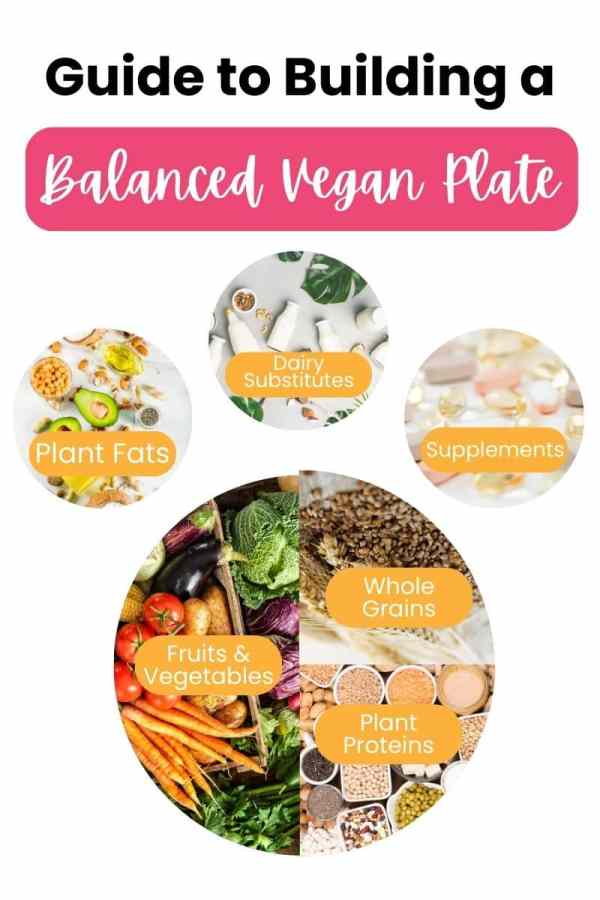
Fruits and Vegetables
Ideally, half of the plate should consist of a variety of nutrient-dense fruits and vegetables that contain vitamins, minerals, and fiber. I like to think about filling half of my plate with color – colorful fruits and vegetables tend to have high amounts of antioxidants, too!
Examples of colorful fruits include berries (blueberries, blackberries, strawberries), oranges, pineapples, peaches, grapes, and more. Choose a wide range of vegetables, from leafy greens like spinach and kale to cruciferous vegetables like broccoli and cauliflower, to maximize your nutrient intake. Some of my favorites are asparagus, brussel sprouts, carrots, and green beans.
Whole Grains and Starches
Another quarter of the plate should be made up of whole grains (starches) or starchy vegetables. Whole grains provide complex carbohydrates for sustained energy, along with fiber and important nutrients like B vitamins. They also contain protein!
Examples of whole grains include quinoa, brown rice, whole wheat pasta, whole grain breads, and others. Starchy vegetables include things like peas, potatoes, and corn.
Proteins
The last quarter of the plate should focus on plant-based proteins. It’s common to be concerned about protein intake in vegetarian and vegan diets, but there are actually a ton of different options that are great sources of protein! As long as you’re consuming a variety of foods, and building your plate correctly, you won’t have to worry about protein.
Some examples of vegan proteins are all types of beans (chickpeas, black beans, kidney beans), lentils, soy-based products (like tofu, tempeh, edamame, tahini), nutritional yeast, quinoa, nuts, and seeds.
Healthy Fats
It’s also important to include healthy plant-based fats in your meals.These fats help you absorb fat-soluble vitamins and can also support your heart health with omega-3 fatty acids.
Examples of these healthy fats include avocados, nuts (almonds, walnuts, cashews, pistachios, peanuts), seeds (chia, flax, hemp, sesame), nut butters, and olive oils.
Dairy Substitutes
Today, many plant-based dairy alternatives are enriched with essential vitamins and minerals that are commonly found in dairy milk. This process acts to boost their nutritional content, making it easier to meet your daily needs as a vegan.
Incorporating fortified dairy substitutes that contain calcium and vitamin D – like plant-based milks (oat, almond, soy), yogurts, and cheeses – can help you meet your needs for these essential nutrients. These items are often fortified with vitamin B12, too!
Supplements
Lastly, as previously mentioned, vitamin B12 is not naturally present in plant foods. Because of this, it’s important for people following a vegan diet to include fortified foods or consider taking a B12 supplement to prevent deficiencies.
There are also vegan omega-3 supplements on the market that are algae-based if you’re concerned about fatty acid intake. Always consult your healthcare provider or a dietitian when considering supplement choices.
In summary, here are some excellent plant-based sources of nutrients for vegan meal prep to keep in your pantry:
- Protein: Lentils, peas, chickpeas, black beans, kidney beans, tofu, tempeh, edamame, quinoa, nuts, seeds, and nut butters
- Calcium: Fortified plant milks, tofu, almonds, sesame seeds, and dark leafy greens like collard greens and kale.
- Vitamin D: Fortified plant milks, fortified orange juice, and mushrooms exposed to sunlight (like portobello or maitake).
- Iron: Lentils, beans, peas, chickpeas, quinoa, pumpkin seeds, spinach, and fortified cereals.
Vegan Meal Prep Basics: Getting Started
Successful vegan meal prep begins with a bit of planning, the right ingredients, and smart storage strategies to keep your meals fresh and delicious throughout the week. Here are my essential strategies and steps to help you get started.
Planning Ahead
The foundation of meal prep is creating a weekly menu. Choose a day to plan out your meals for the week, making sure that you consider your family’s preferences and schedules. This presents a great opportunity to get your kids involved in the decision-making (since choosing all of the meals yourself can be a big responsibility)!
Try to opt for meals that share similar ingredients to make prepping easier and cut down on food waste. Once your menu is set, decide when you’ll shop and prep. I tend to plan my meals on Thursday or Friday, grocery shop on Saturday, and do all of my meal prep/cooking on Sunday. This helps me break it up and make the task less daunting – find a rhythm that works for you!
Shopping Tips
Having a detailed grocery list is key to efficient shopping. Write down all of the ingredients you’ll need for your weekly menu, paying special attention to more versatile items that can be used across multiple meals. Ingredients like grains (quinoa, rice), beans, and roasted vegetables can form the base of many different dishes.
When inside the grocery store, try to stick to your list (as difficult as this can be). This helps you avoid impulse buys, ensure you’re fully prepared when it’s time for prep, and ultimately can reduce food waste and save money.
Batch Cooking
Batch cooking serves as the backbone of meal prep. On your designated prep day, try to cook larger quantities of staple items like grains, beans, and vegetables. For example, you can roast a tray of vegetables, cook a few cups of lentils or beans, and prepare a batch of quinoa.
These kinds of staples can be combined in different ways throughout the week – grain bowls, wraps, salads, and stir-fries – to create a variety of meals with minimal extra effort. Batch cooking not only saves time but also keeps nutritious options readily available in your home.
Storage Tips
Proper storage will help to keep your prepped meals fresh and safe to eat. Use airtight containers and tupperware to store your cooked grains, beans, vegetables, etc. in the refrigerator. I like to label each container with the date I prepared the food to help me keep track of time and freshness.
For longer-term storage, freezing is a great option – just be sure to portion meals before you freeze them to make it easier to reheat the foods whenever needed. You can also easily freeze things like bread and bagels to save them for later.
Prepping salads or raw vegetables? Store them in separate containers and consider keeping dressings, sauces, or toppings on the side until you’re ready to eat. This will help maintain the crispness and flavor of your veggies.
Meal Prep Tips for Families
Now that we’ve covered a few meal prepping benefits, building vegan plates, and how to get started, let’s touch on some simple tips to make meal prep work for your family:
- Get your kids involved! Encourage your kids to help with age-appropriate tasks like chopping, measuring, or assembling meals. This can help them learn about healthy eating and make meal prep a more enjoyable experience for everyone.
- Rotate ingredients. Try to use the same core ingredients to create different meals. For example, cook tofu once and use it in both a stir-fry and for tacos. This will reduce your prep time while keeping your meals interesting and satisfying.
- Don’t forget snacks. Prep easy, nutritious snacks in advance – like hummus with veggies, protein energy bites, homemade muffins, or granola. Having healthy snacks ready to go makes it easier for your family to grab something wholesome.
- Keep it simple. Choose easy, repeatable recipes that don’t require hours of work. Focus on dishes that you can prep in bulk and customize them with different sauces or seasoning blends.
- Prep in stages. If you’re short on time or dealing with a busy schedule, break up your meal prep over a few days. You can chop veggies one day, cook grains another, and assemble your meals when needed. You can also start with prepping the ingredients you’ll need for a recipe the night before. Keep it manageable and start small!
- Create a prep station. Set up a designated space in your kitchen where family members can help with meal prep, and try to keep it organized and clean. A clean kitchen will not only motivate you to get started with meal prep, but it also streamlines the process and makes it easier to be efficient.
Quick & Easy Vegan Meal Ideas
Breakfast
- Overnight Oats
- Tofu Scramble
- Breakfast Burritos (with Tofu Scramble)
- Smoothie Bowls
- Avocado Toast using 4 Ingredient Guacamole
- Chia Pudding
Lunch
- Hummus and Veggie Wraps
- Quinoa Salad
- Stuffed Pita Pockets
- Lentil Soup
- Vegan Grilled Cheese and Tomato Soup
Dinner
- Stir-Fried Veggies and Tofu
- Black Bean or Shredded Tofu Tacos
- Chickpea Curry
- Pesto Pasta
- Buddha Bowls with Roasted Veggies
Snacks
- Protein Energy Bites
- Veggies and Hummus
- Fruit and Nut Bars (homemade or store-bought)
- Apple Slices with Nut Butter
- Popcorn (extra points if topped with nutritional yeast)
Wrapping It Up
Meal prepping can seem overwhelming at first, but the key is to start small and build momentum. You can try choosing one or two meals to focus on at first rather than prepping the entire week’s worth of meals right away. The goal is to make it work for you and your family, so adjust your process until you find a rhythm that suits everyone.
Consistency is key, and developing a routine is one of the easiest ways to stay on track. Choose a prep day that fits your schedule, and stick with it as best as you can. Whether it’s chopping your veggies the night before or setting aside an hour on Sunday to batch cook, the more often you practice, the easier it becomes.
In the long run, you’ll find that meal prepping saves you time, reduces stress, and encourages healthier eating habits.
Frequently Asked Questions (FAQ)
Q: Is vegan meal prep time-consuming?
A: Not necessarily! While it may take a bit of time to plan and prep meals initially, once you get into a routine, it will save you time throughout your week. Batch cooking staple items like grains, beans, and vegetables can make assembling meals quick and easy so you spend less time cooking on busier days.
Q: Is a vegan diet safe for children and teenagers?
A: Yes! According to the Academy of Nutrition and Dietetics, appropriately planned vegan diets are safe and healthful for all stages of life, including childhood and adolescence.1 Just make sure to include a variety of foods that provide essential nutrients like protein, calcium, vitamin D, iron, and vitamin B12, which can all be found in plant-based sources and fortified foods.
Q: What are some good vegan protein sources?
A: There are many excellent plant-based sources of protein! Beans (chickpeas, black beans, kidney beans), lentils, tofu, tempeh, quinoa, nuts, and seeds are all high in protein. Including a variety of these foods in every meal will help you meet your family’s protein needs.
Q: Do I need to take supplements on a vegan diet?
A: Since vitamin B12 is not found naturally in plant foods, it’s recommended that you include fortified foods or take a B12 supplement. Make sure to always consult with a healthcare provider or a dietitian about your supplement choices.
A word from experience, do you NEED to be vegan in order to be healthy? No! There are so many different ways to eat, do what works best for you and your family.
Did you get any new ideas from this post? Let me know below in the comments!
Recent Posts
Tips for When Kids Won’t Eat Dinner
Sep
Cooking Tools for Kids (That You’ll Actually Use Together)
Jul
Top 50 Toddler Snack Ideas with Minimal Effort from a Family Culinary Dietitian
May
Adventurous Eaters: Make it Novel, Not Perfect
Apr
Family Nutritionist: 10 Ways to Cook so Little Kids Will Eat
Mar
High Protein Snacks for Vegetarians
Jan
40 Vegetarian Lunch Ideas for Kids in 2025
Jan
Vegan Meal Prep for Families
Dec